

Commercial Floor Care Programs: Why Scheduled Carpet Cleaning Matters
Commercial carpet handles more activity in a single week than residential carpet may experience in months. Employees, customers, vendors, delivery personnel, and visitors continually track in soil, moisture, salt, grit, and other debris. Even when a facility is vacuumed regularly, the carpet can gradually develop dark traffic lanes, recurring spots, flattened fibers, and an overall dull appearance.
Many businesses respond by scheduling professional cleaning only when the carpet begins to look noticeably dirty. By that point, however, embedded soil may have already affected the carpet’s appearance and useful life.
A commercial floor care program takes a more practical approach. Instead of waiting for visible deterioration, cleaning is scheduled according to foot traffic, building use, seasonal conditions, and the needs of individual areas. This helps businesses maintain a more professional environment while controlling long-term flooring costs.
Commercial Carpet Is a Business Asset
Carpet is often treated as part of the background, but it plays a visible role in how customers and employees experience a building. Worn entrance areas, dark hallways, and stained meeting spaces can make an otherwise well-maintained facility feel neglected.
This does not mean carpet must look brand-new every day. It means the flooring should support the image the organization wants to present.
A scheduled maintenance program helps protect that image by addressing soil before it becomes severe. It also makes carpet care more predictable. Facility managers can plan cleaning around business hours, seasonal slow periods, tenant schedules, or important events instead of arranging an urgent service after a complaint.
Terry’s Cleaning & Restoration provides commercial carpet cleaning along with upholstery and partition cleaning, tile, stone and grout cleaning, hardwood floor cleaning, air duct cleaning, dryer vent cleaning, water damage restoration, mold remediation, warehouse and plant air washing, and power washing. This allows businesses to work with one experienced company for several cleaning and restoration needs.
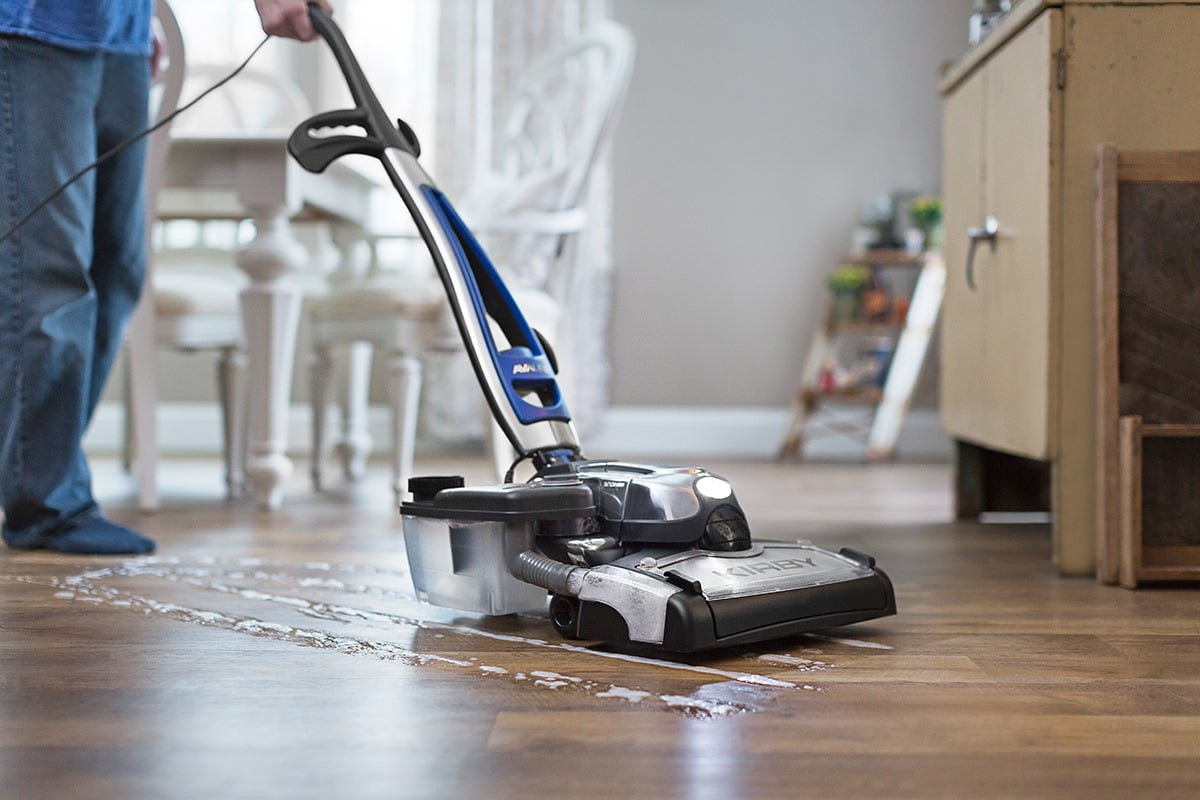
Commercial Floor Cleaning Service
Why Vacuuming Alone Is Not Enough
Regular vacuuming is the foundation of any commercial carpet care program. It removes dry soil before foot traffic pushes that material deeper into the carpet.
The Carpet and Rug Institute recommends vacuuming commercial carpet according to traffic levels: daily in high-traffic areas, approximately twice a week in medium-traffic areas, and weekly in light-traffic spaces. It also recommends moving slowly and paying attention to corners and edges where dust tends to accumulate.
However, vacuuming primarily removes loose particles. It cannot fully address oily soil, food residue, beverage spills, tracked-in grime, or material that has bonded to the carpet fibers.
Terry’s Cleaning & Restoration pretreats carpet to loosen the bond between soil and fiber. The company then uses truck-powered steam cleaning, a rotary extraction tool, soft water brought to the property, and a neutral rinse. These methods are designed to reach beyond the surface cleaning provided by ordinary vacuuming.
Vacuuming and professional extraction should not be viewed as competing services. They perform different jobs and work best as parts of the same maintenance plan.
Embedded Soil Can Shorten Carpet Life
Dry soil may appear harmless, but small particles can act like an abrasive when they are repeatedly pressed against carpet fibers. The result can be dullness, visible traffic lanes, texture changes, and premature wear.
The Carpet and Rug Institute’s commercial maintenance standard explains that dry soil can scratch and abrade carpet fibers, shortening the carpet’s useful life. Its guidance emphasizes routine vacuuming, spot cleaning, and periodic restorative cleaning to prevent excessive soil buildup.
This is one reason waiting until carpet looks heavily soiled can be expensive. Some areas that appear dirty may improve significantly with professional cleaning. Other areas may have already suffered physical wear that cleaning cannot reverse.
A scheduled program helps remove soil before it has years to accumulate. Extending the time between carpet replacement projects can produce meaningful savings, especially in larger facilities where removal, disposal, new materials, furniture moving, and installation can disrupt operations.
Different Areas Need Different Cleaning Frequencies
A commercial floor care plan should not treat every square foot the same.
Entrance areas, main corridors, elevators, reception spaces, break rooms, and frequently used work areas usually collect soil faster than private offices, storage rooms, or lightly used meeting spaces. Carpet near exterior doors may also be affected by rain, mud, snow, and road salt during Northern Indiana’s changing seasons.
The Carpet and Rug Institute recommends periodic deep cleaning for commercial facilities and suggests giving additional attention to entrance areas. Its facility guidance notes that deep cleaning removes soil that vacuuming misses, while interim maintenance can help improve appearance between full restorative cleanings.
Rather than placing the entire property on one rigid schedule, a facility may benefit from a tiered approach:
- High-traffic areas receive more frequent professional attention.
- Moderate-traffic areas are cleaned on a regular rotational schedule.
- Light-use areas are evaluated and cleaned as needed.
This approach helps direct the maintenance budget toward the areas that need it most.
Scheduled Cleaning Makes Budgeting More Predictable
Reactive cleaning usually occurs at an inconvenient time. A customer complaint, major stain, executive visit, tenant turnover, or important event suddenly creates pressure to have the carpet cleaned immediately.
A planned program reduces these surprises.
Facility managers can include professional carpet cleaning in the annual maintenance budget and divide the work throughout the year. This can be easier to manage than approving a large emergency project after several areas have deteriorated at once.
Scheduled service also creates an opportunity to monitor the condition of the flooring. Technicians can identify recurring spots, unusually heavy traffic patterns, moisture concerns, or areas where protective measures may be needed.
Terry’s charges by the square foot for floor cleaning services and provides free, no-obligation quotes. This pricing structure can help commercial customers estimate costs based on the areas included in each cleaning visit.
Fast Spot Response Still Matters
A professional cleaning schedule does not replace daily attention to spills. Coffee, food, grease, tracked-in moisture, and other accidents should be addressed as soon as possible.
The Carpet and Rug Institute recommends blotting liquid spills with a clean, white absorbent cloth rather than scrubbing. Scrubbing can spread the material, damage the carpet texture, and make the affected area more noticeable. Cleaning products should also be applied carefully because excessive detergent can leave residue that attracts new soil.
Employees responsible for facility care should know whom to contact when a spill occurs and which products are approved for the carpet. A simple response process can prevent a minor accident from becoming a permanent stain.
Recurring spots should be documented. A stain that repeatedly reappears may indicate that material remains deeper in the carpet or that cleaning residue was left behind during a previous treatment.
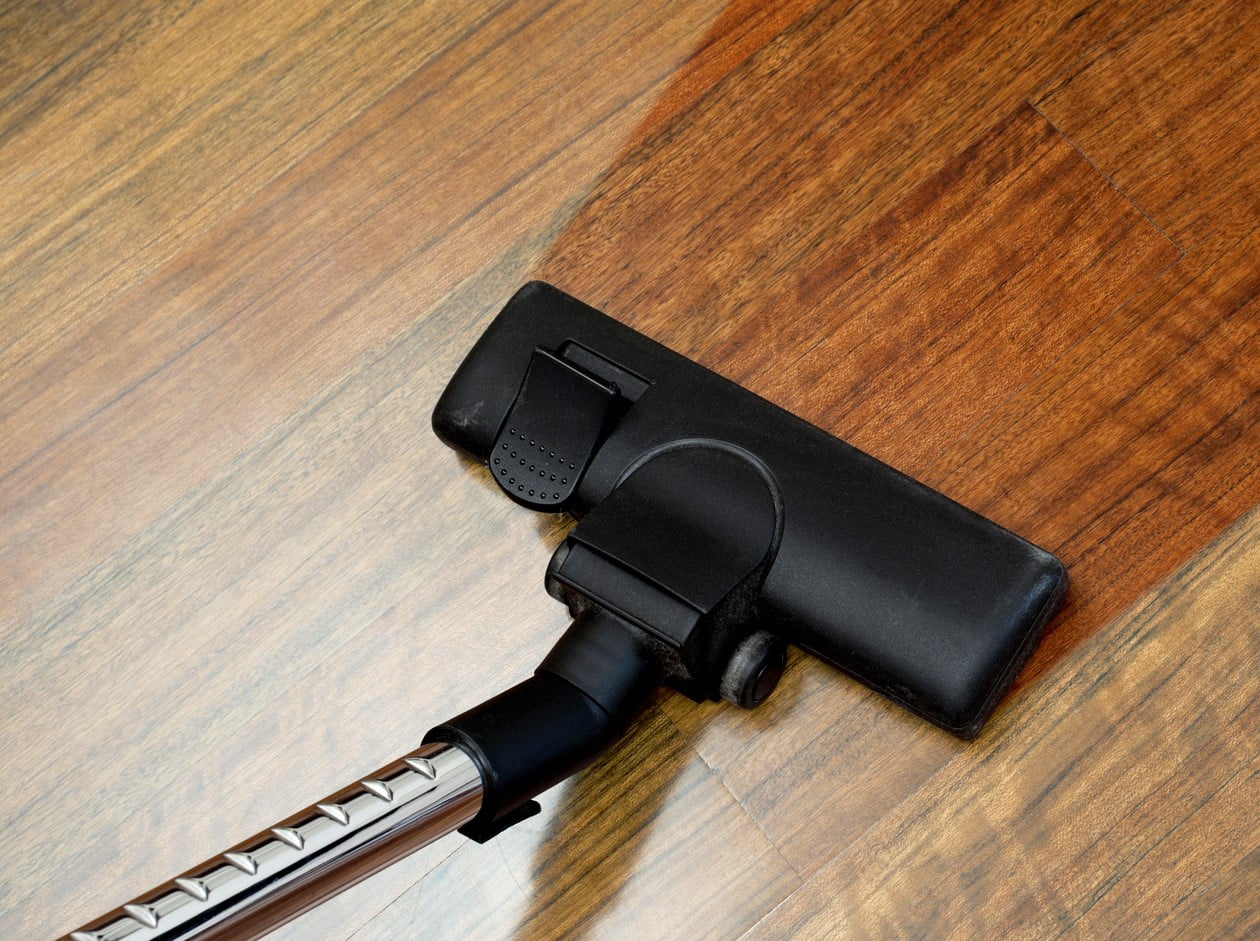
Commercial Floor Cleaning
Professional Cleaning Can Reduce Operational Disruption
Business owners sometimes delay carpet cleaning because they are concerned about drying time, noise, employee movement, or interruption to customers. Scheduling helps solve much of this problem.
Cleaning can be arranged in sections so the entire building does not have to be taken out of service. Work may also be planned around lower-traffic periods or times when certain rooms are not being used.
Before cleaning begins, the facility can prepare the area by moving loose items, protecting sensitive equipment, identifying stains, and communicating which spaces must remain accessible. A clear plan allows the technician to work efficiently and helps employees understand when areas will be available again.
Terry’s uses truck-powered steam cleaning with a rotary extraction process and a neutral rinse. The company also brings its own soft water in a 150-gallon tank.
The appropriate cleaning schedule and preparation process will depend on the size of the property, how the space is used, and the condition of the carpet.
A Complete Floor Care Program May Include More Than Carpet
Many commercial buildings contain several flooring types. Carpet may cover offices and hallways, while tile appears in restrooms, entrances, kitchens, or production areas. Hardwood or luxury vinyl may be used in reception spaces and customer-facing rooms.
Maintaining only the carpet can leave the rest of the building looking inconsistent.
Terry’s commercial services include carpet cleaning, upholstery and partition cleaning, tile, stone and grout cleaning, and hardwood floor cleaning. The company can also provide air duct cleaning, dryer vent cleaning, water damage restoration, mold remediation, air washing for warehouses and plants, and power washing.
Coordinating related services may reduce the number of vendors a business must manage and make it easier to plan maintenance across the property.
Experienced Commercial Carpet Cleaning in Northern Indiana
Commercial carpet cleaning should be based on the actual use and condition of the facility. A small professional office will not necessarily need the same schedule as a busy public building, warehouse office, or property with frequent customer traffic.
Terry’s Cleaning & Restoration is a family-owned company founded in 1990. Terry has worked in the cleaning industry since 1984 and is an IICRC Certified Master Cleaning Technician and Journeyman Restoration Technician. The company is an IICRC Certified Firm and has multiple certified technicians on staff.
Based in Goshen, Terry’s serves commercial and residential customers throughout Goshen, Elkhart, Granger, and surrounding Northern Indiana communities. The team uses experienced technicians, truck-powered cleaning systems, and practical recommendations to help customers choose services that fit the condition of their property.
Build a Maintenance Plan Before the Carpet Looks Worn
Scheduled commercial carpet cleaning is not simply about improving the appearance of the floor before an important meeting. It is part of protecting a significant property investment.
Regular vacuuming, immediate spot treatment, entry matting, targeted interim service, and periodic professional cleaning work together to slow soil buildup and reduce premature wear. A planned program also gives facility managers better control over timing, budgets, and operational disruption.
Terry’s Cleaning & Restoration provides commercial carpet and floor care services throughout the Goshen, Elkhart, and Granger areas. Contact the team to request an evaluation and develop a cleaning schedule based on your facility’s traffic patterns, flooring types, and maintenance priorities.
https://www.google.com/maps?cid=3599337546590963590