


High-Traffic Carpet Cleaning Solutions for Offices and Retail Spaces
Commercial carpet rarely wears evenly. In most offices and retail spaces, a few specific areas receive the majority of the foot traffic. Entrances collect outdoor soil and moisture. Hallways develop dark pathways. Reception areas see a constant flow of visitors, while checkout lanes, fitting rooms, waiting areas, and employee break rooms often show wear long before the rest of the building.
Waiting until the entire carpet looks dirty is not the most effective way to maintain it. By that point, soil may be deeply embedded in the fibers, spots may have become more difficult to remove, and heavily used areas may look noticeably different from the surrounding floor.
A better approach combines frequent vacuuming, immediate spill response, entry matting, targeted interim care, and scheduled professional carpet cleaning. This allows businesses to focus their maintenance budget on the areas that need the most attention while protecting the appearance and useful life of the flooring.
Why Commercial Carpet Becomes Dirty So Quickly
Every person entering a building carries a small amount of outdoor material on their shoes. Dirt, sand, salt, moisture, parking lot residue, and other particles are deposited near the entrance and then carried farther into the space.
Retail stores may also deal with food and beverage spills, shopping-cart traffic, seasonal weather, and customers moving continuously through the same aisles. Offices often experience concentrated wear near elevators, reception desks, conference rooms, copy areas, and employee entrances.
Regular vacuuming removes much of the loose, dry soil, but it cannot fully remove oily residue, bonded grime, beverage spills, or particles that have been pushed deeper into the carpet.
The Carpet and Rug Institute recommends creating a commercial maintenance program that includes walk-off mats, a vacuuming schedule, prompt spot removal, interim cleaning, and periodic deep cleaning. It also emphasizes that carpet maintenance should be planned rather than performed only after visible soiling appears.
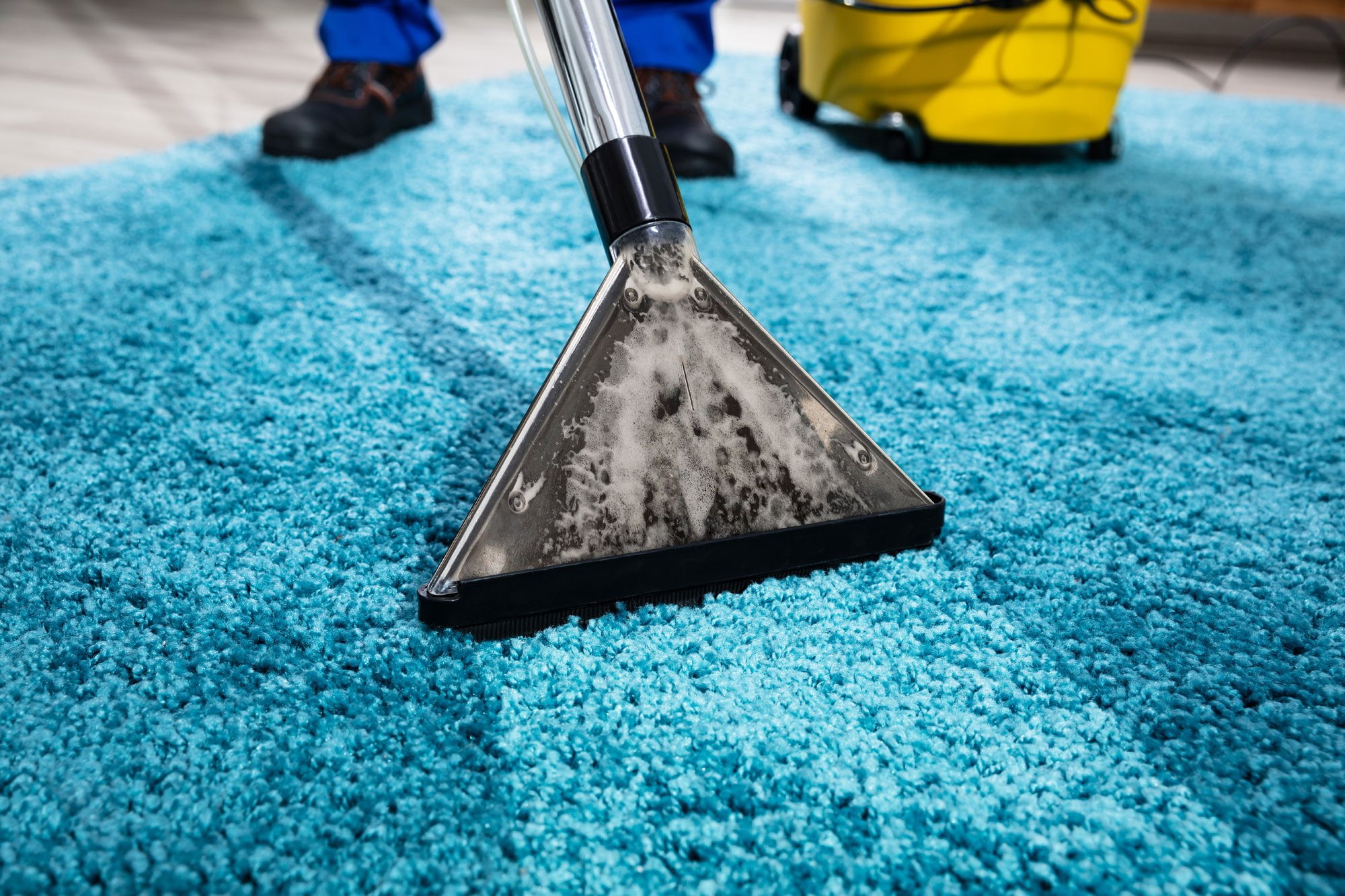
High-Traffic Carpet Cleaning
Divide the Property Into Traffic Zones
A practical carpet-cleaning plan should not treat every area of the building the same.
A private office used by one employee does not need the same cleaning frequency as a main entrance used by hundreds of people. Similarly, a stockroom or low-use conference room may remain presentable much longer than a customer checkout area.
Commercial properties can generally be divided into three maintenance zones:
- Severe-traffic areas, such as main entrances, checkout lanes, reception desks, and primary corridors
- High-traffic areas, including shared offices, waiting rooms, break rooms, and frequently used meeting spaces
- Lower-traffic areas, such as private offices, storage rooms, and occasionally used conference rooms
This zoning approach allows managers to clean heavily used areas more frequently without paying to service the entire building every time.
The Carpet and Rug Institute recommends more frequent vacuuming in high-traffic areas and notes that severe-traffic areas may require significantly more interim and deep cleaning than the rest of a facility.
Make Entrance Matting Part of the Cleaning Plan
One of the most effective ways to protect commercial carpet is to stop soil before it reaches the installed flooring.
Exterior and interior walk-off mats help capture dirt and moisture as people enter. The mats need to be large enough for visitors to take several steps across them rather than stepping over a small mat and directly onto the carpet.
The mats also need regular care. A saturated or heavily soiled entrance mat eventually becomes another source of dirt. It should be vacuumed, cleaned, and replaced when it can no longer perform effectively.
CRI recommends using substantial entry matting and giving greater cleaning attention to entrances because these areas receive the highest concentration of tracked-in soil.
During Northern Indiana winters and wet spring weather, entry maintenance becomes especially important. Moisture, road salt, and mud can quickly create visible traffic patterns that spread from the doorway into lobbies, hallways, and retail aisles.
Vacuum According to Use, Not Convenience
Vacuuming is the foundation of commercial carpet maintenance. When dry soil remains on the floor, foot traffic can push it deeper into the carpet and repeatedly grind it against the fibers.
A light pass once a week may be enough for a private office, but it is unlikely to keep up with a busy entrance or retail aisle.
CRI recommends daily vacuuming in high-traffic areas, approximately twice-weekly vacuuming in moderate-traffic areas, and weekly attention in lightly used spaces.
Vacuuming technique also matters. Employees should move slowly enough for the machine to collect debris and should pay attention to carpet edges, corners, furniture bases, and transitions where soil tends to accumulate.
Creating a written schedule makes the work more consistent. Rather than relying on someone to decide whether the carpet “looks dirty,” each zone receives care based on how it is used.

High-Traffic Carpet Cleaning Service
Respond to Spills Before They Become Permanent
In an office, coffee spills are common. In retail environments, the problem may involve soft drinks, food, cosmetics, tracked-in grease, or moisture from wet footwear.
The longer a spill remains, the greater the chance that it will spread, penetrate deeper, or leave a visible stain.
Employees should know how to respond without making the problem worse. Liquid should be blotted with a clean, absorbent towel rather than scrubbed. Aggressive rubbing can spread the material and distort the carpet texture.
It is also important to avoid using random household cleaners. Excess detergent may leave a sticky residue that attracts new soil, causing the treated area to darken again.
A simple spill-response station can include clean white towels, disposable gloves, an approved carpet spotter, and instructions for contacting the person responsible for facility maintenance. Difficult or recurring spots should be documented and shown to the professional carpet-cleaning technician.
Use Professional Cleaning to Remove Embedded Soil
Daily maintenance addresses surface debris and fresh spills. Expert carpet cleaning provides the deeper reset needed to remove bonded soil and residue.
Terry’s Cleaning & Restoration pretreats carpet to loosen the bond between soil and carpet fibers. The team then uses truck-powered steam-cleaning equipment and a rotary extraction tool rather than relying only on a standard cleaning wand. Terry’s also brings soft water in a 150-gallon tank and uses a neutral rinse as part of the process.
This is especially valuable in commercial traffic lanes, where soil has been repeatedly pressed into the same pathways.
Professional cleaning cannot reverse permanent fiber wear, fading, or crushing. However, it can help determine whether a dark area is removable soil or physical damage. Addressing buildup before it becomes severe gives the carpet a better chance of maintaining a consistent appearance.
Clean High-Traffic Areas More Often Than the Entire Building
Many facilities do not need whole-building carpet cleaning every few months. They may need targeted cleaning in entrances, hallways, reception areas, and other high-use zones, followed by a more comprehensive service at longer intervals.
This rotational approach can help businesses control costs while preventing visible problem areas from becoming neglected.
For example, a retail store might clean its entrance and checkout paths more frequently than its administrative offices. A professional office may prioritize the lobby, main corridor, conference rooms, and employee break area.
The exact schedule should reflect customer volume, weather exposure, building use, carpet type, and how quickly the flooring becomes visibly soiled. CRI’s commercial guidance supports combining daily maintenance, interim cleaning, and periodic deep cleaning rather than relying on one method alone.
Plan the Service Around Business Operations
Commercial carpet cleaning requires coordination. Customers and employees may still need access to parts of the building, and sensitive equipment or merchandise may need protection.
Before scheduling, identify which spaces can be temporarily closed and which pathways must remain available. Cleaning the property in sections can allow the business to continue operating while the work is completed.
Loose items, cords, boxes, small displays, and breakable objects should be removed from the areas being serviced. Facility managers should also point out recurring stains, problem entrances, pet-related concerns in pet-friendly offices, and any history of leaks or water intrusion.
Drying conditions should be considered as part of the plan. Terry’s recommends appropriate indoor temperature and HVAC airflow to help create a better drying environment after carpet cleaning.
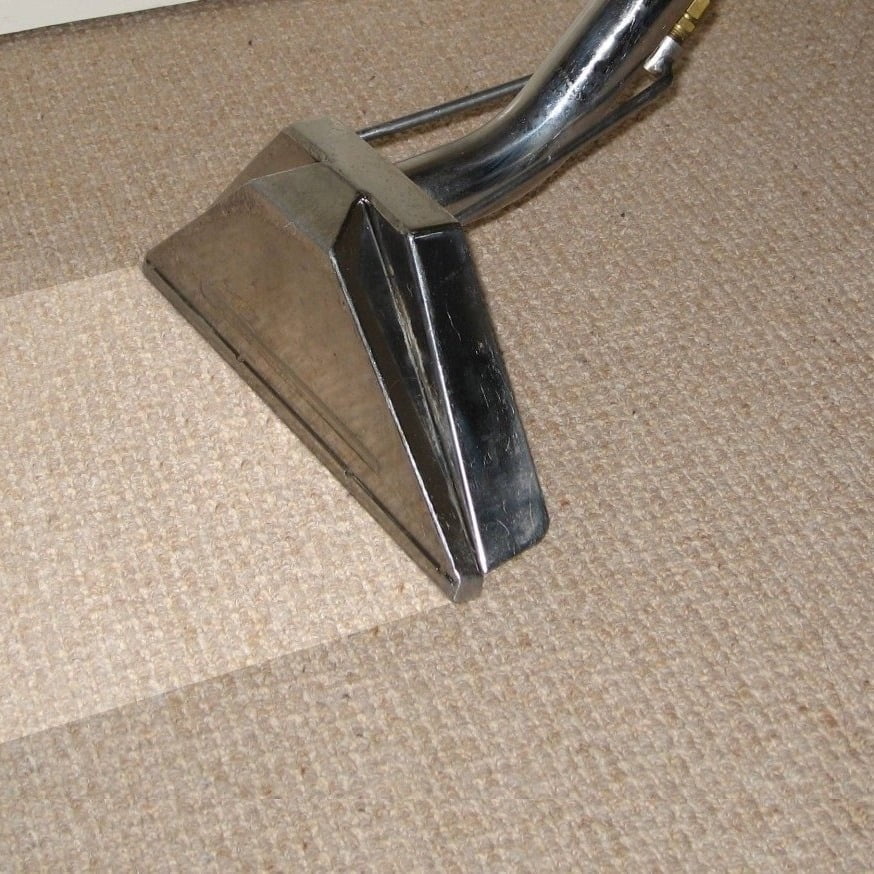
Carpet Cleaning Service
Consider the Other Surfaces Customers See
Commercial appearance is not determined by carpet alone. Offices and retail spaces may also contain upholstered seating, fabric partitions, tile, stone, grout, hardwood, and other surfaces that become soiled through daily use.
Terry’s commercial services include carpet cleaning, upholstery and partition cleaning, tile, stone and grout cleaning, hardwood floor cleaning, air duct cleaning, dryer vent cleaning, water-damage restoration, mold remediation, warehouse and plant air washing, and power washing.
Coordinating related services can create a more consistent result throughout the property. A freshly cleaned lobby carpet may have less impact when nearby chairs, partitions, or tile entrances still look neglected.
Not every surface needs to be serviced at the same frequency. The goal is to develop a maintenance schedule based on actual use rather than cleaning everything automatically.
Know When the Problem Is More Than Dirt
Recurring discoloration, a persistent musty smell, or carpet that feels damp may indicate a moisture problem rather than ordinary soil.
Plumbing leaks, roof issues, appliance failures, and water entering near exterior doors can affect carpet, padding, walls, and flooring underneath. Routine cleaning should not be used as a substitute for moisture detection and structural drying.
Terry’s provides commercial water-damage restoration and mold-remediation services in addition to carpet cleaning. The ability to identify when a problem requires restoration rather than routine maintenance can help a business avoid paying for the wrong service.
Commercial Carpet Care in Northern Indiana
Terry’s Cleaning & Restoration provides carpet cleaning and related services for commercial properties throughout Goshen, Elkhart, Granger, and surrounding Northern Indiana communities. The family-owned company has operated since 1990 and is an IICRC Certified Firm with certified technicians who receive continuing training.
High-traffic carpet care works best when it is planned before the flooring looks severely worn. Entry matting, frequent vacuuming, fast spill response, targeted maintenance, and professional extraction all play a role.
Contact Terry’s Cleaning & Restoration to request a quote and discuss a commercial carpet-cleaning plan based on your building’s busiest areas, operating schedule, and flooring needs.
https://www.google.com/maps?cid=3599337546590963590